Impact of the ORI Cooperative Fish Tagging Project
By Gareth Jordaan and Bruce Mann
[Originally published in the July 2023 issue of SKI-BOAT magazine]
ONE of the earliest fish tagging projects started in the mid-1800s when Atlantic salmon were tagged by means of fin clips and by attaching pieces of wire to their tails and jaws with unique labels.
Closer to home, many tagging projects have been initiated in South Africa, but few yielded tangible results, with much of the data being unpublished or unused. During the 1970s, ORI’s Rudy van der Elst recognised the value of fish tagging information and involving the angling public in the collection of such data, subsequently establishing the ORI Cooperative Fish Tagging Project (ORI-CFTP).
The project was formally started in 1984, with the aim of enlisting active angler support in tagging specific marine fish species around the entire southern African coastline. Still in operation over 38 years later, this project has become one of the longest ongoing operational citizen science projects of its kind in Africa.
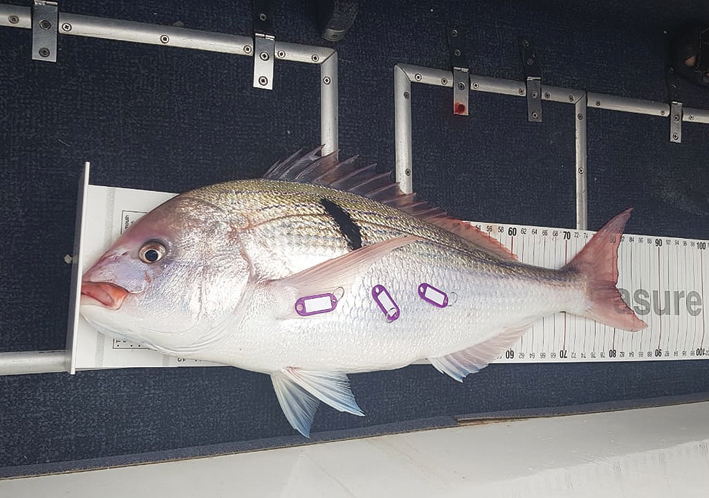
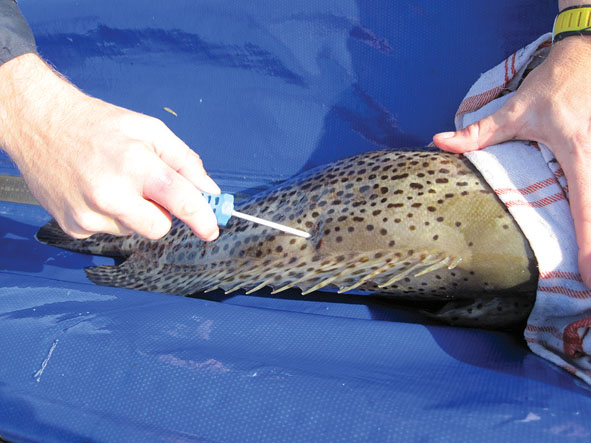
Over the years, different types of tags have been used and these have gradually been improved, as have the tagging methods. Today, the main types of tags used in the project are dart or “spaghetti tags” supplied by Hallprint in Australia.
Technology has also vastly improved over the years, allowing for easier reporting and collection of data, and for the data to be housed on a large online database, rather than hand-written and recorded into a logbook, as was done in the early days of the project.
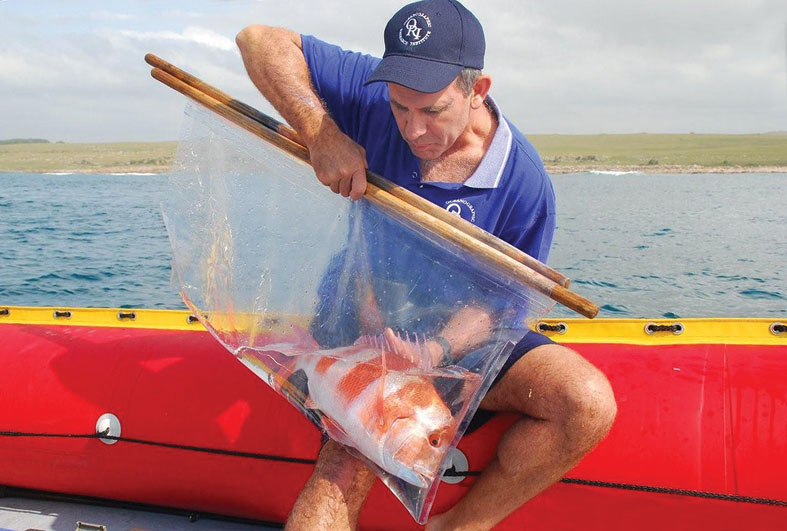
As an added bonus, the project has also been able to improve the methods of fishing and fish handling used by tagging members. From the types of hooks used (we suggest using barbless circle hooks rather than barbed J-hooks or treble hooks), to the way fish are landed and handled fish (using a wet cloth over the eyes, landing the fish on a stretcher or using a knotless landing net, and keeping the fish in fresh seawater as much as possible), to methods of safely releasing fish, especially those caught in deep water and suffering from barotrauma, the project has helped change anglers’ thinking and methods.
Over the 38-year duration of the project, a veritable goldmine of data has been collected which has led to some incredible results and achievements. Over 7 000 anglers have joined the project, with some of the original members still remaining active to this day, including Bruce Mann, Charles Lilford, Derick Stemmet, John Rance, Nic de Kock and Riekert van Heerden.
It has been very encouraging to see how the ORI-CFTP has gained popularity more recently, with more anglers becoming aware of fish tagging and wanting to join the project. Currently there are about 483 active members (anglers who tag at least one fish in a year) and an average of 183 new members who join each year. 2021 was a record year for the project with more than 380 new members joining.
With more anglers joining the project, more fish are being tagged each year. On average there are about 9 613 fish tagged each year. Since the start of the project an incredible 374 897 fish have been tagged and released.
Although the total number of fish tagged is impressive, the number of tagged fish recaptured is even more important, as it is the recapture data that allows scientists to calculate things like fish growth rates and movements patterns.
We continually remind our tagging members that it is not about the number of fish they tag, but rather the importance of the species they tag (based on our priority species list), the manner in which they catch, handle and tag their fish, and the frequency with which tagged fish are recaptured.
Overall, there have been more than 23 600 tag recaptures (about 6.3%) since the start of the ORI-CFTP, with an average of 605 tag recaptures each year. Importantly, the recapture percentage has continued to increase over the years, suggesting that, besides there being more tagged fish in the ocean increasing the chances of catching a tagged fish, members are catching, handling, landing and tagging their fish in a more responsible manner. It is also possible that there has been an improvement in the reporting of recaptured tagged fish.
Over the years we have had some incredible recaptures reported to us, such as a raggedtooth shark that was at liberty for more than 26 years, a red steenbras that was at liberty for more than 25 years and a Roman that was at liberty for more than 22 years.
The Roman recapture is a prime example of just how useful tag and release projects can be. Roman were originally thought to live to a maximum age of 19 years, based on counting growth rings in sectioned otoliths, however, when this Roman was recaptured after 22 years at liberty, it proved that they can live longer than that.
This recapture also highlighted how slow growing this species is, with the fish having grown only about 20cm in just over 22 years. The fish was recaptured in the exact same spot that it was originally tagged, proving again how resident Roman are.
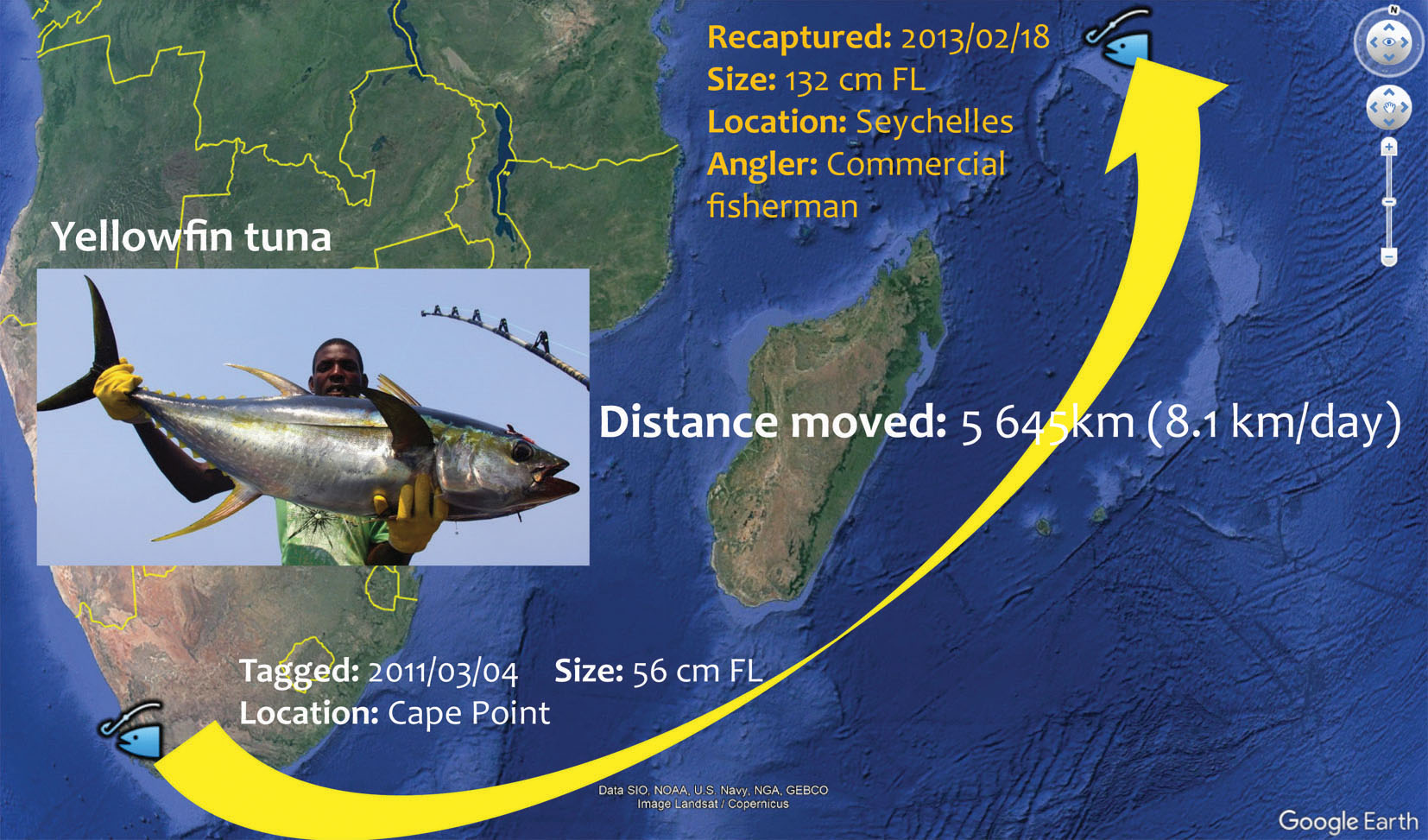
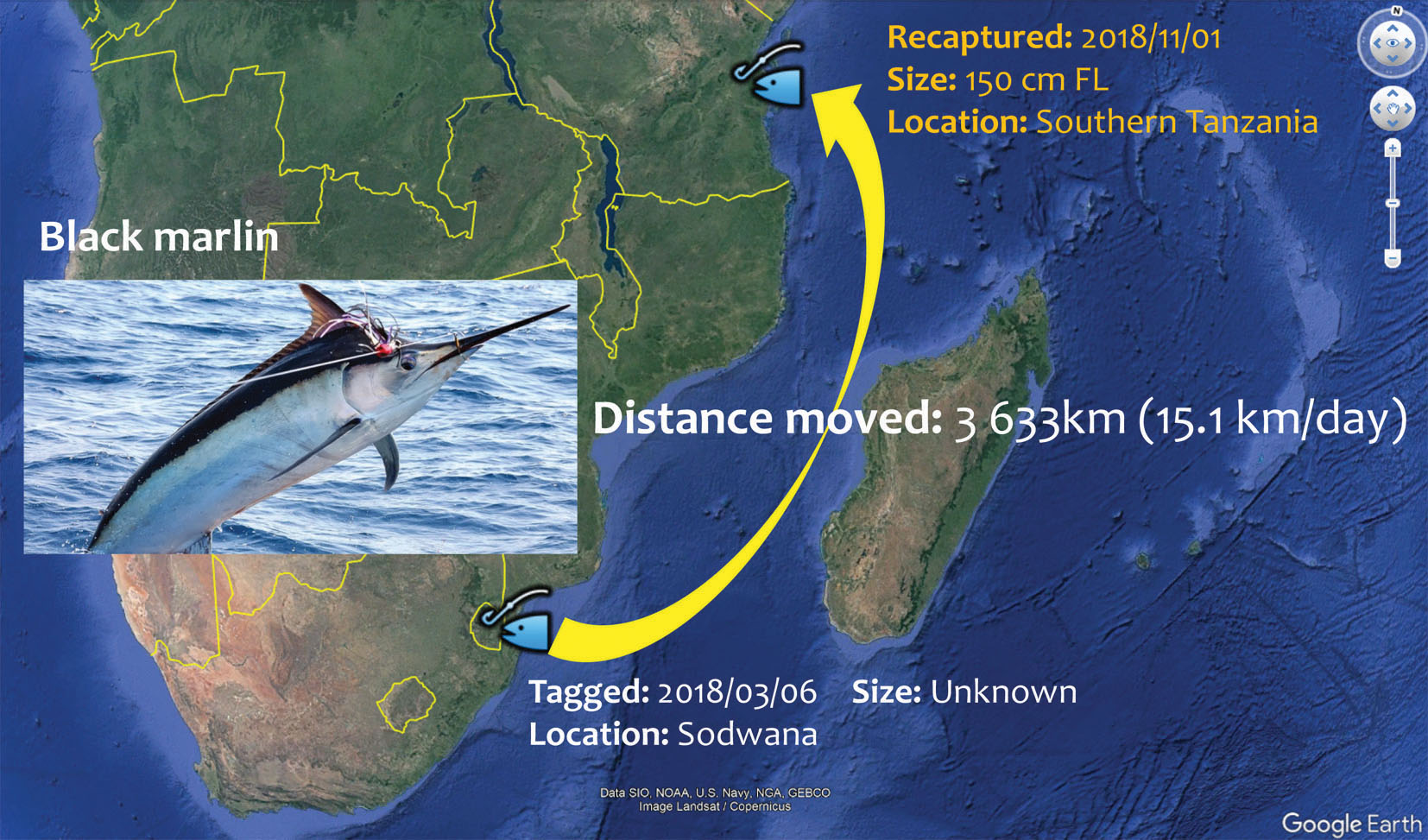 It’s even more exciting when recaptures are reported to us further afield than South African waters. For example, a yellowfin tuna originally tagged off Cape Town was recaptured in Seychelles, and a black marlin that was tagged off Sodwana was recaptured in Tanzanian waters.
Members of the ORI-CFTP originally tagged fish all along the entire southern African coastline, from Namibia to Mozambique. However, in the late 1990s the Namibian authorities asked ORI tagging members to stop tagging fish in Namibian waters as they were starting their own national tagging project. Similarly, the Mozambican fisheries authorities have requested that only migratory gamefish species be tagged by ORI tagging members in Mozambique waters.
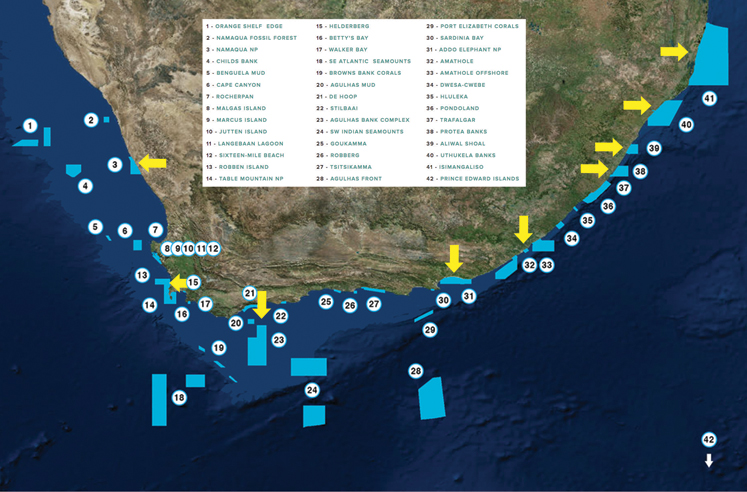
In South Africa, the Western Cape has the most tag releases and recaptures, followed by the Eastern Cape and KwaZulu-Natal. Several scientific fish tagging and monitoring projects around our coastline — particularly in some of our marine protected areas (MPAs) such as DeHoop, Tsitsikamma, Pondoland, Dwesa/Cwebe and iSimangaliso — have also contributed significantly to the number of fish tagged and recaptured.
These projects have also played an important role in improving our understanding of the movement patterns of various linefish species and have shown just how important our MPAs are in helping to conserve many of our more resident linefish species. They have also proved that healthy fish populations within MPAs can spill over into adjacent fished areas, thus helping to ensure sustainable fishing.
Overall, 375 different species have been tagged in the ORI-CFTP. The galjoen (South Africa’s national fish) has the greatest number of tag releases, with over 72 000 having been tagged since 1984, and more than 5 300 recaptures (making up 21% of the total recaptures overall).
Gathering tagging data on so many different fish species over such a long time has allowed us to make this information available to numerous scientists and students who have used it in their research projects and theses. This has also resulted in many scientific publications in peer-reviewed journals which are critical to improving fisheries policy and management.
For example, some recent scientific publications have looked at the movement patterns and growth rates of various linefish species such as the critically endangered giant sandsharks, cavebass, catface rockcod and Scotsman.
The data collected by the ORI-CFTP has provided important baseline data for movement studies on numerous fish species. Using conventional external dart tags, you know where the fish is when you tag it, and you know where it is if you recapture it, but you have little idea where it has gone during its time at liberty.
 Excitingly, this gap in our knowledge can now be filled using more sophisticated methods of tagging such as acoustic telemetry and satellite tagging (see https://saiab.ac.za/platforms/
acoustic-tracking-array-tracking/) which is producing some truly fascinating results.
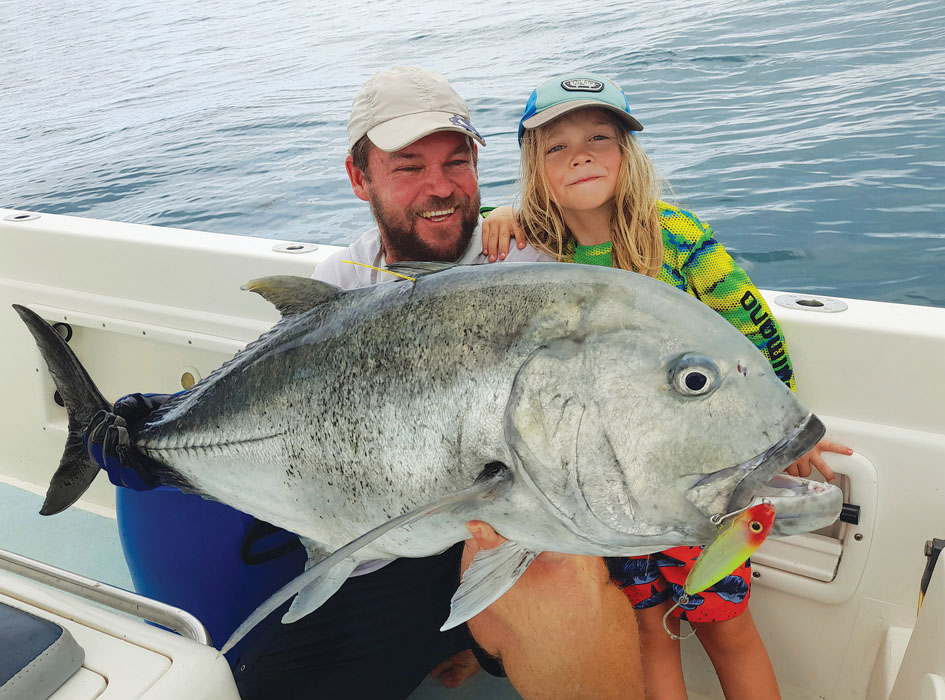
The recent results from acoustic tagging of giant kingfish (Caranx ignobilis) and their amazing annual spawning migration to southern Mozambique is a fine example and you can read more about this at DOI: https://doi.org/10.3354/meps12975 .
In addition to pure fish research, the ORI-CFTP has helped to improve the cooperation between anglers, managers and scientists, and has also helped to change the conservation ethics of marine recreational anglers in South Africa towards catch-and-release fishing.
In 2021, a survey of ORI-CFTP members was conducted with the aim of critically assessing the contribution that the project has had on the marine recreational angling community in South Africa. Some of the comments from this survey are quoted below and show just how much this project means to, and has encouraged, anglers around the country.
“Without any doubt, the concept of tag and release has encouraged the release of more fish.”
“The Tagging Project, more than any other initiative, has engendered a spirit of conservation in South Africa.”
“I joined the Tagging Project during its year of inception, when I was 18 years old. I remain a proud member of the project. I hope to be a member of this project for many years to come.”
To read more about this assessment visit https://doi.org/10.2989/1814232X.2022.2126525
Anglers who’ve joined the project learnt about tag and release, gained a better understanding of the movement patterns and growth rates of many of our linefish species and the value of sustainable fishing, and ultimately contribute towards the improved conservation and management of these species.
We thank all the anglers who have joined the ORI-CFTP over the years and helped this project grow from strength to strength. Without your support and tagging efforts, this great achievement would not have been possible.
For further information follow ORITag on Facebook and Instagram and visit the SAAMBR YouTube channel <https://www.saambr.org.za/ori-tag-release/> to view ORI-CFTP instructional videos.
FURTHER READING…
Daly R, Filmalter JD, Daly CAK, Bennett RH, Pereira MAM, Mann BQ, Dunlop SW, Cowley PD. 2019. Acoustic telemetry reveals multi-seasonal spatiotemporal dynamics of a giant trevally Caranx ignobilis aggregation. Marine Ecology Progress Series 621: 185-197. DOI: https://doi.org/10.3354/meps12975
Mann BQ, Dalton WN, Jordaan GL, Daly R. 2023. Movement patterns and growth rate of Scotsman Polysteganus praeorbitalis (Family: Sparidae) tagged in the Pondoland Marine Protected Area, Eastern Cape, South Africa. African Zoology 56(1): DOI: 10.1080/15627020.2023.2170717
Mann-Lang JB, Mann BQ, Jordaan GL, Daly R. 2022. Assessment of the impact of participation in the Oceanographic Research Institute’s – Cooperative Fish Tagging Project on angler attitudes and behaviour. African Journal of Marine Science 44(4): 299-309, DOI: 10.2989/1814232X.2022.2126525