
WHERE TO FISH Part 20
From Stilbaai to Mossel Bay
By Shawn Mey
(Originally published in the July 2025 issue of Ski-Boat magazine)
THE stretch of coastline between Mossel Bay and Stilbaai offers some of the most diverse and rewarding fishing experiences in South Africa. Whether you’re a seasoned offshore angler or a shoreline enthusiast, this region is a paradise brimming with opportunity – if you know where to go and what to target.
This article offers a comprehensive look at the fishing hotspots from Mossel Bay to Stilbaai, including seasonal insights and proven tips to help you make the most of your time on the water.

The Southern Cape’s Coastal Gems:
Mossel Bay, Gouritsmond and Stilbaai
Mossel Bay is a thriving harbour town that combines natural beauty with historical richness. Known for its mild climate and golden beaches, it’s also a hub for deep sea fishing, offering quick access to productive offshore reefs.
The town boasts a well-developed marina and plenty of services catering to the angling community.
Gouritsmond is a quieter, more laid-back coastal village nestled at the mouth of the Gourits River. Known for its unspoiled beaches and excellent river and reef fishing, it’s a favourite for anglers seeking a more tranquil experience without compromising on fishing quality.
Stilbaai is a scenic seaside town situated on the Goukou River estuary. It’s a well-known summer holiday destination and a hotspot for inshore fishing, especially for kob.
Stilbaai’s waters are teeming with life, particularly during the warmer months.
 Fishing from Mossel Bay – A Worldclass Start
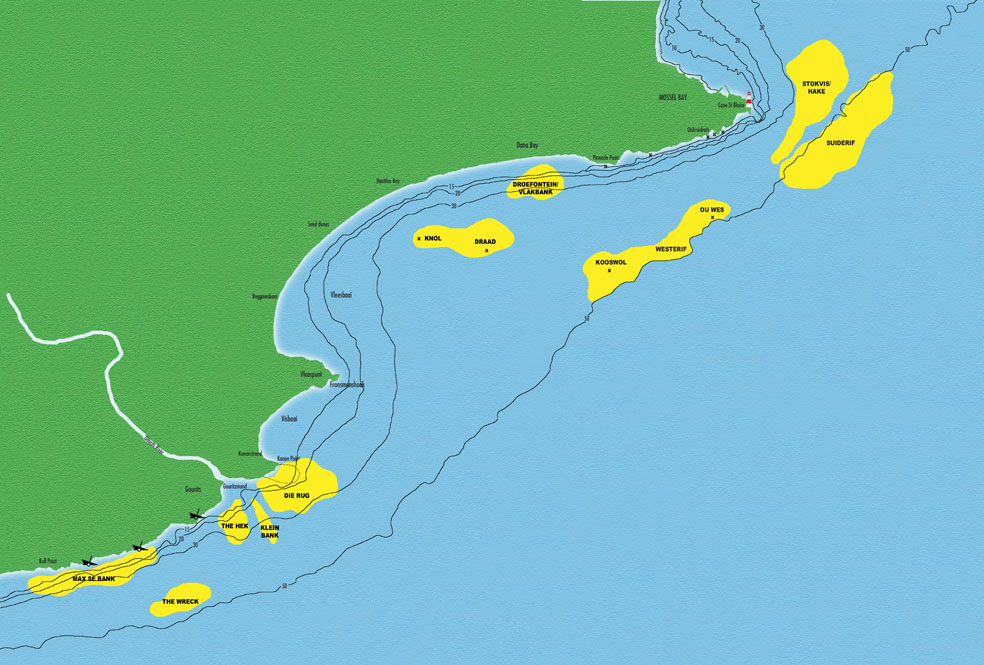
Fishing from Mossel Bay offers a range of opportunities, starting with the hake-rich clay banks which are found between 45– and 80 metres. Key spots include Bob se Bank, Kooswol, Ou Wes, and the well-known Guide Bank.
These deeper areas produce exceptional results, especially for hake, but in the winter months, Kooswol and Ou Wes often surprise anglers with schools of loose kob cruising through.
Closer to shore, Danabaai offers access to productive mid-depth reefs (25–45m) such as Knol Draad and *Vlak Bank, where kob and red roman are regularly caught.
Drifting the Inshore Waters
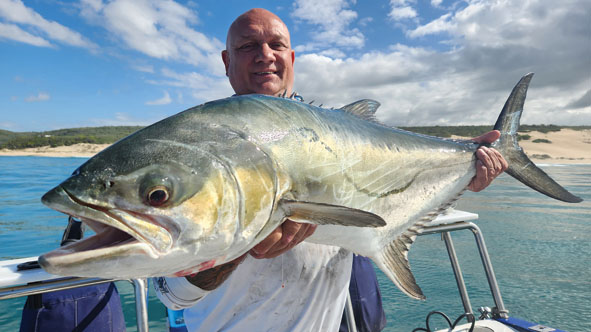
The sandy shoreline from Danabaai to Vleesbaai offers consistent summer action for garrick (leervis) and bonito.
Anglers drift slowly in this stretch, casting plugs and presenting live bait to surface-hunting predators. This style of fishing is exciting, especially when the water is warm and baitfish are abundant.
Rugged Reefs and Rewards
From Vleesbaai, around Fransmanshoek and past Kanon Point, the coastline is marked by shattered, shallow reefs.
These nearshore rocks provide excellent structure for targeting species like red roman, musselcracker (both white and black) and yellowtail.
However, the real gem begins just beyond Kanon Point.
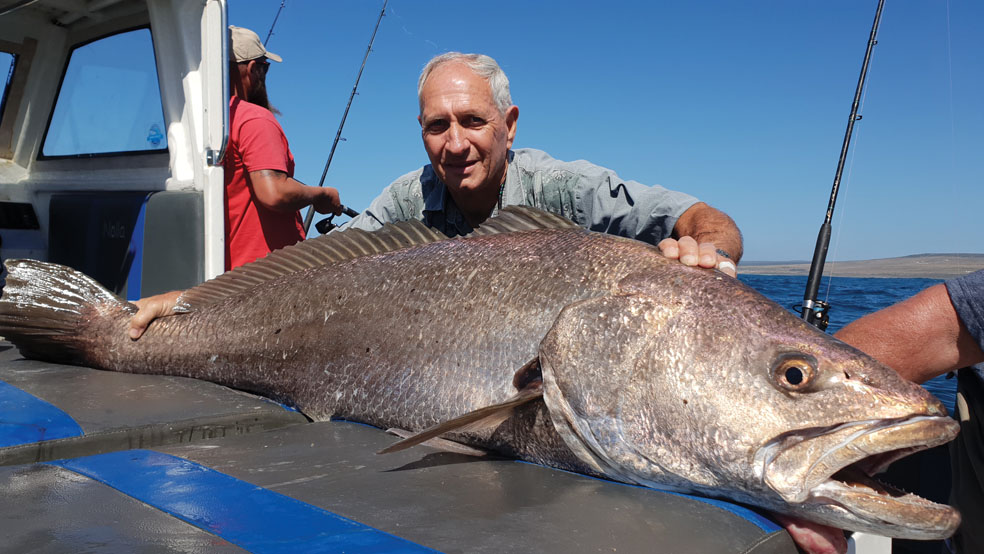
This area is known locally as “Die Rug” – a vast and complex reef system stretching all the way to the Gouritsmond River mouth. It is, without doubt, one of the top kob (kabeljou) fishing areas in the country during the summer months from November to March.
Here kob are caught on lures, jigs, dead bait and live bait. The reef spans depths from 15- to 45 metres, and fish location often requires sonar work and experience to pinpoint schools.
Gouritsmond’s Offshore Gold
Just offshore from the Gouritsmond River, you’ll find the productive Klein Bank, a reef system in depths between 25– and 45 metres that consistently produces kob.
Slightly to the east lies The Hek, a legendary kob hotspot often considered one of the best-known reefs for this species in South Africa.
The reef features a mix of broken clay banks, with depths dropping from 22- to 40 metres. Aside from kob, anglers may encounter red roman, yellowtail and even schools of bonito during the summer season.
Hidden Challenges and Rich Rewards
Further along the coast, The Wreck presents one of the more challenging spots to fish due to conflicting currents and swell, making anchoring difficult.
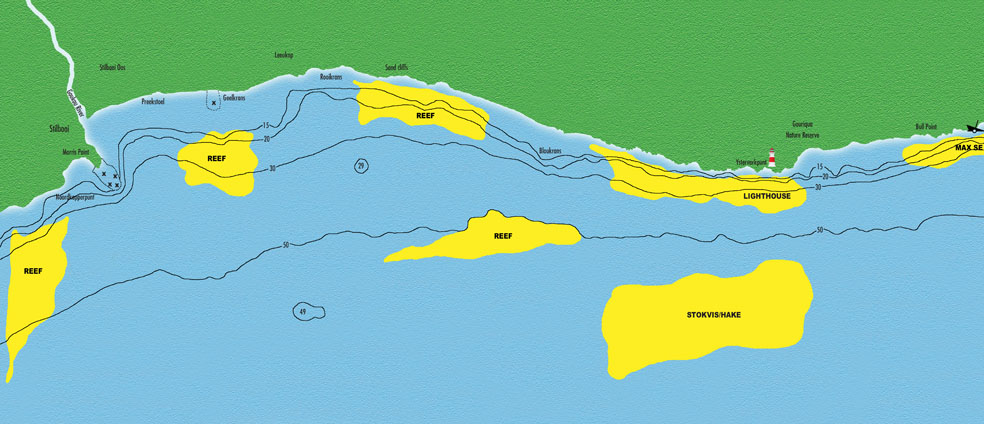
When conditions are unfavourable at The Wreck, many anglers head inshore to Max se Bank, a dynamic reef system stretching toward Gouriqua Nature Reserve. These shallower banks (15- to 30 metres) are echo-sounding zones, meaning fish locations vary by day.
This area is known for diverse catches including musselcracker, roman and yellowtail.
 Gouriqua and Beyond – The Lighthouse Reefs
In front of the Gouriqua/Ystervark Point Lighthouse, anglers can target nearly every major reef species found in South Africa. This includes trophy-sized yellowtail up to 20kg, red steenbras, roman, and both types of musselcracker.
From the lighthouse, anglers can also head offshore to the clay banks around the 80-metre mark, which are ideal for deep water hake fishing.
Investigating kob country
The final leg of this angling journey takes you to the shallower reefs from Stilbaai heading further west to Duiwenhoks River. These 15- to 30 metre deep reefs are ever-changing; fish move constantly, making sonar your best ally.
Stilbaai is renowned for kob, particularly in the warmer months. While most kob here range from 3- to 8kg (locally referred to as “korthol”), they often appear in dense schools, making for exciting fishing sessions.
Final thoughts
Fishing the waters between Mossel Bay and Stilbaai offers both variety and abundance. Whether you’re hunting kob, reef dwellers or deep sea species, this stretch of coast delivers thrilling opportunities throughout the year. With a bit of local knowledge and the right gear, your next fishing trip could turn into the experience of a lifetime.
So, pack your rods, check your echo sounder, and make your way to the Southern Cape – world-class fishing awaits.