

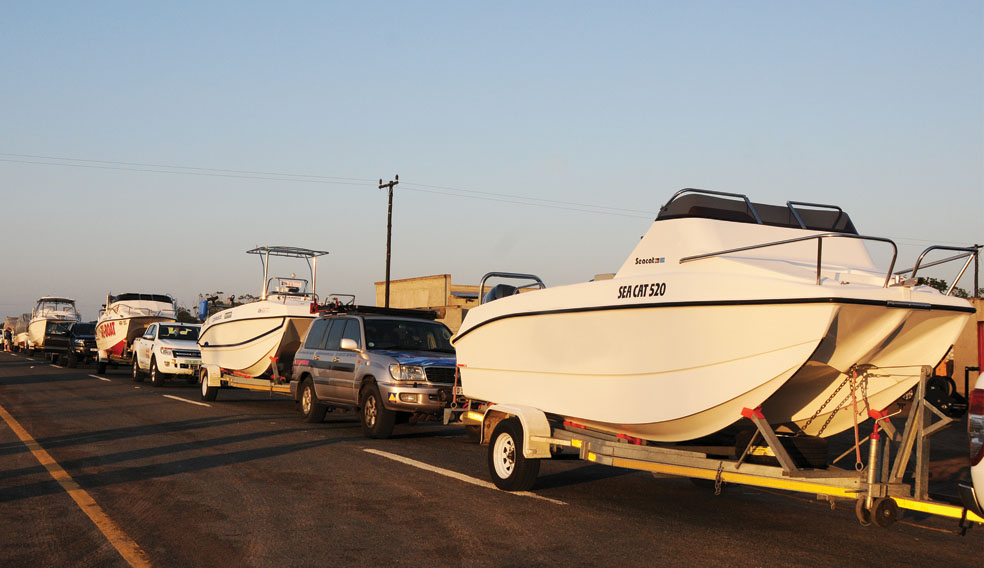
TROUBLE-FREE TRAILERING
Your ultimate guide to safe, smart, and claim-proof towing
(Originally published in the July 2025 issue of SKI-BOAT magazine)
By Cathi Warriner and Megan Shepard of Team CMI (Club Marine Insurance)
IN the world of boating, if there’s one thing you don’t want to rely on, it’s hearsay. Whether it’s your buddy at the marina or that Facebook group full of confident DIY captains, misinformation is a slippery slope, often ending with denied insurance claims or other tragedies.
At CMI Brokers, South Africa’s trusted watercraft insurance specialists, we’ve seen it all. From rookie oversights to seasoned skippers caught off guard, trailer-related issues are some of the most common reasons for towing troubles and repudiated claims.
In this article we’ll share some real-world advice to help you tow legally, avoid breakdowns, and have a better chance of arriving safely.
 DID YOU KNOW?
• Using a registered and roadworthy trailer is non-negotiable. That means working brakes and an inflated spare tyre – at the very least. And no, your car’s spare won’t do; it must be a dedicated trailer spare.
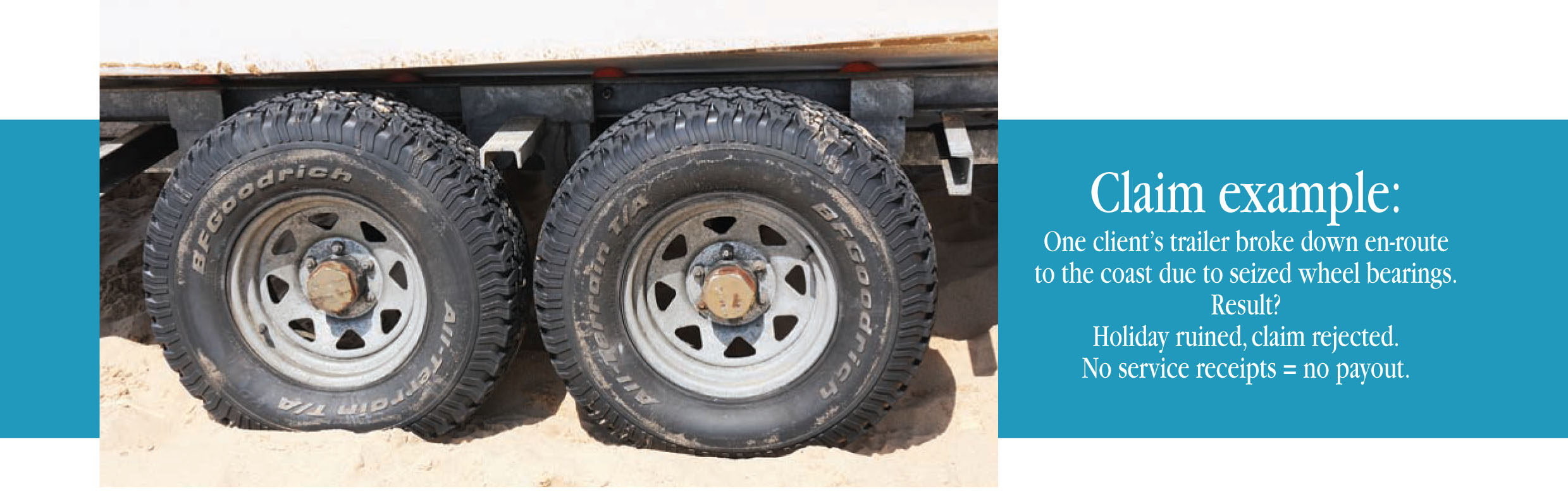
• Wheel bearings are the Achilles’ heel of long-distance towing. Unless you have oil-filled axles, annual servicing is a must. Most trailer breakdowns, especially with longer trips, occur because of wheel bearing failure. The servicing of wheel bearings is a maintenance issue, so wheel bearing-failure which causes subsequent damage is generally not worthy of a claim.
• Your trailer’s coupler has a load rating. For bigger boats over 24ft, you’ll need a heavy-duty coupler (usually a pin coupling) that’s typically rated for up to 3.5 tons.
• Your vehicle’s tow hitch will have a towing capacity which must also match your trailer’s weight. Look for the stamped plate to confirm the maximum trailer mass allowed.
• Couplers and hitches wear out! Bumpy roads, heavy loads, harsh weather and salt exposure mean eventually you’ll need to replace both the tow hitch and coupling.
• Check your vehicle’s towing capacity on the manufacturer’s plate inside your driver’s door or in the manual. Total mass (boat + trailer + car + extras) must not exceed the recommended gross vehicle mass (GVM).
• Just because your car can pull the boat doesn’t mean it can stop it safely. Many rollover accidents occur on downhill sections of road or during emergency braking, usually due to inadequate trailer brakes or an underweight tow vehicle.
Towing Legally;
What the Law Says
The National Road Traffic Act sets out very clear rules for towing. Ignore these at your peril!
Gross vehicle mass (GVM) = the maximum operating mass of the vehicle (or trailer) as per manufacturer, when fully laden. The tare mass is that of an empty vehicle (or trailer).
The maximum extra mass that can be carried by the vehicle (or trailer) is: GVM minus tare mass.
UNBRAKED TRAILER LIMITS
An unbraked trailer’s maximum GVM must be less than half your tow vehicle’s tare mass, and is capped at 750kg.
Vehicle Tare Max Unbraked GVM
1 000kg 500kg
1 500kg 750kg
2 000kg 750kg
BRAKED TRAILER LIMITS
The braked trailer’s GVM must not exceed the tare mass of the tow vehicle, up to 3 500kg.
Vehicle Tare Max Braked Trailer GVM
750kg 750kg
1 500kg 1 500kg
3 500kg 3 500kg
If your boat exceeds the tare of your vehicle, it’s time to call a professional haulier.
 ARE YOU LICENSED?
Do you have the correct driver’s licence to tow a boat? You might be surprised at how many people don’t.
The older EB licences allow you to tow 3 500kg with a fully functional independently braked trailer. However, after the year 2000, new regular driver’s licences were issued on code B which only allows you to tow 750kg.
Check your licence, as many people have had to upgrade their licences to be legally allowed to tow over 750kg.
Code B:
Light vehicles – passenger cars and bakkies. Maximum tow weight = 750kg (unbraked). Vehicle must weigh twice as much as the trailer. For a 750kg trailer, the towing vehicle’s minimum tare must be 1 500kg. Even slightly less is illegal!
Code EB:
Light motor vehicles; able to pull a boat, trailer or caravan. Can tow up to 3 500kg with an independently braked trailer. Weight of vehicle must equal or exceed trailer weight.
If trailer weight is more than tare of the tow vehicle, a service brake should be installed. If GVM exceeds 750kg, you must have overrun brakes.
PACKING YOUR BOAT
It’s tempting to throw all the extra stuff into the boat and just go, but a bit of prep can save you from disaster.
Don’t overload
Tare mass minus GVM = Max load.
Adding items such as heavily laden cooler boxes, bags, fishing or waterskiing equipment in the boat adds to the overall weight of your load which could put you over the legal limit. Traffic authorities sometimes check this at weigh-stations.
Pack smart
On single-axle trailers, heavier items should be packed just ahead of the axle. Too far back and the nose of the boat/trailer lifts; too far forward and the stability of the trailer is compromised
 Other things to check
• Jockey wheel: Raise it, secure it tightly, or store it in the vehicle.
• Rear lights: Test the plug. Faulty lights increase your risk of having an accident and can also incur traffic fines.
• Spare wheel: Must be inflated, in good condition and securely bolted onto the trailer.
• Safety chain: Check it’s in good working order before moving.
Loop it over your tow-ball mount every single time you tow something.
• Brakes: Get advice from a professional on whether you need hydraulic, overrun, or electric brakes, and check them regularly.
• Tyres: Must match load rating. Insurers will check if the correct tyres were used, and using the incorrect tyres can result in a voided claim.
 TRAILER AND BOAT SECURITY
When it comes to storage and theft prevention, insurers look for proof of violent and forced entry and evidence of secure storage.
• Store your boat and trailer in enclosed, locked premises or approved yacht/ski-boat clubs, marinas, boat yards or places of repair/sale.
• Use chains, Master Locks, or wheel clamps to secure it if it’s parked off-site.
• Lock away non-fixed equipment (coolers, tackle etc) in secure compartments or completely remove them from the vessel.
• Don’t leave your trailer unattended in isolated areas. At least keep eyes on your vehicle or vessel.
• Take photos of break-in damage if a theft occurs. If there’s no visible damage your claim may be rejected.
EXTRA TRAILERING TIPS
• While launching or retrieving a boat, trailer brakes get wet. They will dry while you’re travelling, but if you’re storing your trailer near the water, consider removing the brakes temporarily to prevent them seizing. Obviously remember to re-fit the brakes before you next travel!
If your brakes seize, power exerted by a vehicle/tractor could force and damage the brakes with a knock-on effect on the rims, axles etc.
• If you’re using an imported trailers, use an override pin to stop brakes from locking while reversing. When you’re travelling, tape the reverse pin to the trailer to ensure the brakes don’t lock.
• Inspect your trailer while the boat is in the water. Check felt, cables, axles and rollers.
• Consider asking your marine service provider to inspect the trailer during your boat’s regular maintenance sessions.
FINAL THOUGHT
Whether you’re heading off for a day at the dam or trailering your craft across the country to reach the sea, being on the right side of the law isn’t just smart, it’s essential. It protects your safety, your boat and your insurance claims.
If you have any other queries about towing legally, feel free to contact us at CMI. Let us help keep your trailer trip trouble-free and your claims stress-free.